老郭的思维路径|国内一半算力在造爽剧:资源流向哪里,考核说了算 · Half the Compute Goes to Sho…
- 2026-11-19 20:39:45
国内一半算力在造爽剧:资源流向哪里,考核说了算
Half the Compute Goes to Short Dramas: Where Resources Flow, the Scorecard Decides
这两天,一条数据被反复转发。据微博热搜与百度热搜榜 10 月 16 日显示,「国内超一半 AI 算力在造爽剧」的话题持续发酵,多家媒体报道之后引发了不小争论。我看到它的头一个念头是,这大概又要吵成一场道德题,资源被浪费了,太短视了,该管一管。说到底,一组数字最容易照出来的东西,是我们读数字时习惯的那套姿势。
In the past two days one set of numbers has been passed around repeatedly. Trending on Weibo and sitting on Baidu's trending board on October 16, the claim that "more than half of China's AI compute is busy making feel-good dramas" kept building, and multiple outlets reported it, setting off a fair argument. My first thought was that this would become a moral question again: resources wasted, too short-sighted, someone should step in. At bottom, what a set of numbers reveals most readily is the reading posture we habitually bring to it.
据公开报道,这组比例出自 A 股上市公司中文在线的一份《投资者关系活动记录表》:国内 AI 的 Token 消耗里,约 55% 流向短剧和视频生成,约 24% 用于电商广告,真正投入研发环节的约 15%。同一时间窗口里,模型路由平台 OpenRouter 披露,10 月 5 日至 11 日国内大模型的周调用量约 86.74 万亿 Token,连续二十四周超过美国。
Per public reports, the breakdown comes from an investor relations record filed by Chinese Online, a listed company: of domestic AI token consumption, roughly 55% goes to short dramas and video generation, about 24% to e-commerce advertising, and only about 15% into research and development. Over the same window, the model-routing platform OpenRouter reported that in the week of October 5 to 11, Chinese large models logged roughly 86.74 trillion tokens of calls, exceeding the United States for a twenty-fourth straight week.
内容供给端的热度也能对上。据公开报道,今年前八个月国内上线微短剧约 43 万部,仅抖音一个平台上半年新上线的 AI 短剧就约 22 万部,制作一部 12 集的短剧,算力成本接近 20 万元。中文在线给出的解释是,短剧对视频生成和 Token 周转速度要求很高,制作过程中要靠反复「抽卡」筛选画面,消耗自然被推上去。
The supply side matches the heat. Per public reports, roughly 430,000 micro-dramas went online domestically in the first eight months of this year, and Douyin alone launched about 220,000 AI-made short dramas in the first half; producing a twelve-episode drama burns close to 200,000 yuan in compute. Chinese Online's explanation is that short dramas demand fast video generation and fast token turnover, and the making process relies on repeated "gacha" reruns to screen frames, which pushes consumption up.
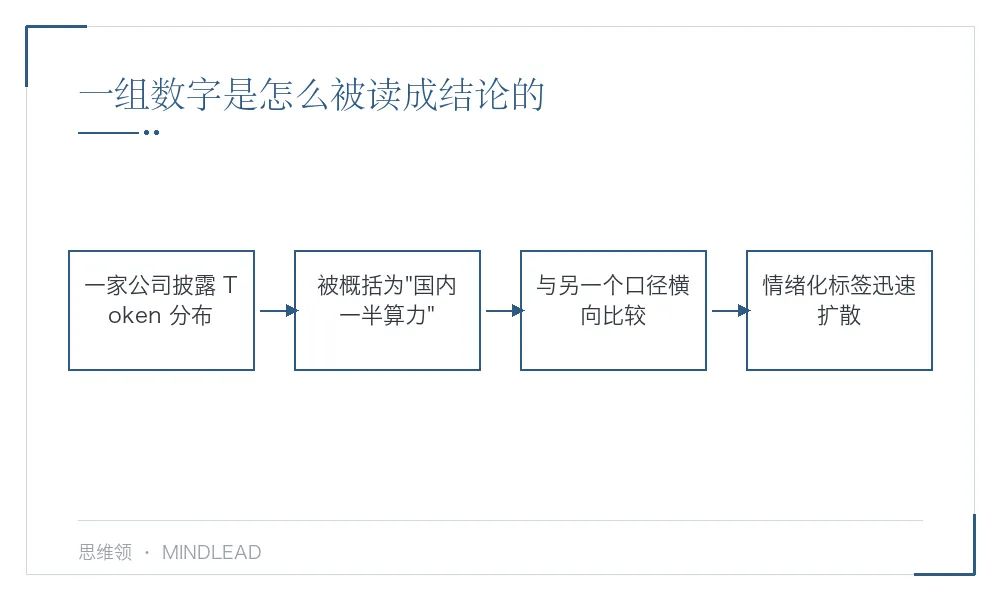 图 1 · 一组数字是怎么被读成结论的
Diagram: how one set of numbers turns into a headline conclusion.
我的直觉答案很顺:资源错配。研发只占 15%,其余都在娱乐和卖货,于是解法听起来也顺:呼吁一下,引导一下,把算力挪到该去的地方。
My instinctive answer came easily: resources are misallocated. R&D gets only 15%, the rest goes to entertainment and selling, and so the fix sounds just as easy: call for it, guide it, move the compute where it ought to go.
这个答案错在哪?它把「资源的流向」当成一次选择失误,好像只要有人意识到问题、表个态,流向就会改回来。可算力不会因为被批评一句就改道。资源往哪走,跟我们的期待关系不大,跟谁在为哪种产出付钱关系很大。
Where is it wrong? It treats the direction of resources as a mistake in choosing, as if a few people noticing the problem and taking a stand would turn the flow around. Compute does not change course because someone scolded it. Where resources go has little to do with our expectations and a great deal to do with who pays for which kind of output.
原来那个问题是「算力该用在哪」,这是个价值判断,谁都能给出一套答案。我把它换成另一个:是什么在决定算力的去向。换完之后,动作就变了。前一个问题只能催人去表态,后一个问题会逼人去看激励结构,也就是谁在为哪种产出持续付钱。
The original question was "where should compute be used," a value judgment anyone can answer. I traded it for another: what decides where compute goes. The moves change after the swap. The first question only pushes people to declare a position; the second forces a look at the incentive structure, at who keeps paying for which output.
拆开来看,短剧这条链路的变现路径短,内容上线,用户充值或者看广告,收入当天就能看到。研发这条链路长,回报以年计,还很难把功劳归到某一笔具体投入上。当一家公司被考核的东西是「这一季度变现多少」,资源一定流向能在这个季度变现的地方。这是一道算术题,跟道德关系不大,却实实在在决定着一个组织里每个人的决策环境。
Take it apart. The short-drama chain has a short path to revenue: content goes live, users top up or watch ads, and the money shows up that day. The R&D chain is long, its returns counted in years, and credit is hard to assign to any single input. When what a company is measured on is "how much we monetize this quarter," resources will surely flow to whatever monetizes this quarter. That is arithmetic, with little to do with morality and everything to do with the decision environment inside an organization.
这里可以用上一个思维模型。所谓古德哈特定律,指的是当一个指标成为目标,它就不再是一个好指标。1975 年,英国经济学家查尔斯·古德哈特在讨论货币政策时提出这个观察;1976 年,美国社会科学家唐纳德·坎贝尔给出过类似表述,后来被称作坎贝尔定律。
A mental model fits here. Goodhart's Law says that when a measure becomes a target, it ceases to be a good measure. In 1975 the British economist Charles Goodhart made the observation while writing about monetary policy; in 1976 the American social scientist Donald Campbell offered a similar formulation, later called Campbell's Law.
放到这件事里,逻辑就清楚了。如果「算力消耗量」被当成产业活力的指标,那么能烧算力的业务就天然受偏爱,烧得越多的场景越像繁荣。这里面很可能没有人刻意算计,是指标替所有人做了选择。
Put it against this story and the logic is plain. If compute consumption is taken as an indicator of industry vitality, then businesses that burn compute enjoy a natural preference, and the scenes that burn most look most like prosperity. No one inside is necessarily scheming; the measure is making the choice for everyone.
还有一层要补。研发的投入本来就不全靠算力,训练模型要用算力,而用户在应用里每一次调用消耗的 Token 属于使用侧。这份数据统计的恰好是 Token 消耗,也就是调用量,它天然偏向使用侧,这把尺子跟「科研投入」量的是两样东西。
One more layer. R&D spending never rests on compute alone: training a model takes compute, yet every call a user makes inside an app consumes tokens on the usage side. This dataset measures token consumption, that is, call volume, so it leans toward the usage side by construction; that ruler measures something other than "research investment."
当一项指标成为目标,它就不再是一个好的指标。(古德哈特定律,查尔斯·古德哈特,1975 年)
When a measure becomes a target, it ceases to be a good measure. (Goodhart's Law, Charles Goodhart, 1975)
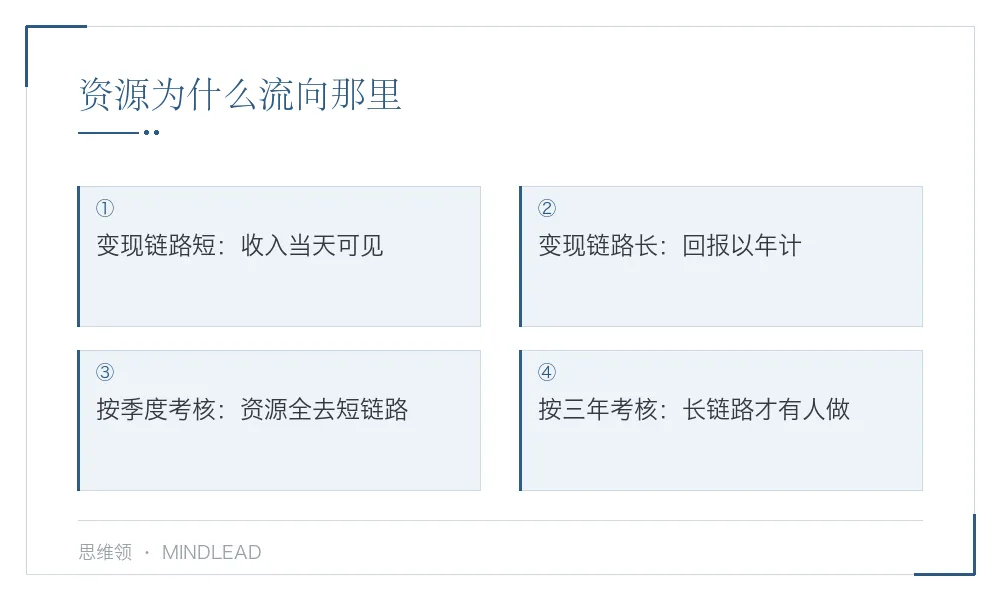 图 2 · 资源为什么流向那里
Diagram: why resources flow where they flow.
这套推理有边界,不然它会滑成一句「市场永远是对的」的漂亮话。
This reasoning has a boundary, or it slides into the platitude that markets are always right.
头一条,被贴上「爽剧」标签的东西未必都是浪费。据公开报道,短剧已经是一门规模不小的内容生意,养活了大批编剧、剪辑和演员,AI 把它做得更快更便宜,本身就是技术落地的一种形态。一句「低价值」把它判掉,同样是偷懒。
First, what gets labeled a feel-good drama is not necessarily waste. Per public reports, short dramas have grown into a sizable content business that supports a great many writers, editors, and actors, and AI makes them faster and cheaper, which is itself one form of technology landing in the world. Writing the whole thing off as low value is lazy too.
第二条,这组数字的口径必须看清。它来自一家公司自己参与的平台生态采样,统计的是 Token 消耗而非物理算力,时间窗口是 2026 年 10 月上旬;「国内一半算力」这个说法,比数据本身大得多。更值得留意的细节是,披露这份数据的公司既做短剧,也做这份测量。看到一组数字,先问三件事:谁披露的、采样范围多大、量的到底是什么。
Second, the measurement basis has to be read with care. It comes from sampling inside one platform ecosystem the company participates in, it counts token consumption rather than physical compute, and its window is early October 2026; the phrase "half of China's compute" is far larger than the datum itself. One detail deserves notice: the company disclosing the figures both makes the dramas and runs the measurement. Faced with any set of numbers, ask three things first: who disclosed it, how wide the sample is, and what exactly it measures.
还有一处要校准:把「变现快」当成仅有的那把尺子,短期看着高效,长期会把那些回报慢、但决定天花板的东西一点点挤出去。激励结构需要有人刻意设计,这件事靠自然流动完不成。
One more calibration: treat speed to revenue as the sole standard and it looks efficient near term while slowly squeezing out the things with slow payback that set the ceiling. Incentive structures need deliberate design; natural flow will not finish that job.
今天就做一件小事。挑出一个你正在被考核的数字,或者你自己给自己定的那个目标,问一句:如果它涨上去了,我真正想要的东西有没有跟着变好。把答案写下来,一句话就够,存进手机备忘录。
Do one small thing today. Pick a number you are being measured on, or a target you set for yourself, and ask: if it climbed, would the thing I actually want get better too. Write the answer down, one sentence is enough, and keep it in your notes.
你有没有见过「指标一走偏,动作就全变形」的时刻?留言说说,你身边那个被考核的数字是什么。
Have you seen a moment when a measure drifted and every move bent to match it? Tell me in the comments which number you are measured on.
问 | 国内一半算力在造爽剧,这个说法站得住吗?
Does the claim that half of China's compute is making short dramas hold up?
答 | 先把口径拆开看。这个比例出自一家 A 股上市公司披露的投资者关系活动记录表,讲的是国内 AI 的 Token 消耗分布,约 55% 用于短剧与视频生成,约 24% 用于电商广告,约 15% 投在研发。它的统计对象是 Token 消耗也就是调用量,采样范围是该公司参与的平台生态,时间窗口是 2026 年 10 月上旬,能反映一个特定视角下的分布,跟「全国算力普查」不在一个量级。据公开报道,披露数据的公司自身也做短剧业务。
Break the basis apart first. The split comes from an investor relations record filed by a listed company in China, describing domestic AI token consumption: about 55% to short dramas and video generation, about 24% to e-commerce advertising, about 15% to R&D. What it counts is token consumption, that is, call volume; its sample is the platform ecosystem the company participates in, and its window is early October 2026, so it reflects one particular vantage point rather than a national census. Per public reports, the company itself is in the short-drama business.
· · ·
问 | 古德哈特定律是什么意思,跟普通人有什么关系?
What does Goodhart's Law mean, and why does it matter to an ordinary person?
答 | 所谓古德哈特定律,指的是当一个指标成为目标,它就不再是一个好指标。1975 年由英国经济学家查尔斯·古德哈特提出,最初针对货币政策,1976 年美国社会科学家唐纳德·坎贝尔给出过类似表述。它对普通人的用处很直接:你考核什么,就得到什么。团队被考核响应速度,质量就往后排;自己被考核步数,睡眠就可能被牺牲掉。
Goodhart's Law holds that when a measure becomes a target, it stops being a good measure. It was put forward in 1975 by the British economist Charles Goodhart, originally about monetary policy, with a similar formulation from the American social scientist Donald Campbell in 1976. Its use for an ordinary person is direct: you get what you measure. Measure a team on response speed and quality slips down the queue; measure yourself on step counts and sleep may get sacrificed.
· · ·
问 | 怎么判断一个指标还适不适合继续用来考核?
How do I tell whether a metric still works as a yardstick?
答 | 问三个问题。这个数字涨了,我真正想要的结果有没有一起变好;如果它涨到极限,会不会把别的更要紧的东西挤掉;有没有人能只改这个数字、不改实际成果就达标。三个问题里有一个答不上来,这个指标就该补一条平衡项,或者换掉。
Ask three questions. If this number climbs, does the outcome I actually want improve with it; if it maxes out, will it crowd out something more important; and can anyone hit it by moving only the number and nothing real. If one of the three has no answer, the metric needs a balancing counterweight, or it needs replacing.
· · ·
问 | 思维领写这类热点,为什么先问数据是从哪来的?
Why does MindLead ask where the data comes from before anything else?
答 | 这是写进风格指南的规矩:数字不确定宁可不写,来源必须标清楚。思维领是一个思维与认知成长类公众号,每天讲一个思维工具,热点只是入口,落点还是把一段思考过程完整走一遍。所以遇到一组数字,先分三步看:谁披露的、采样范围多大、量的到底是什么,口径清楚了再谈结论。
The rule sits in the style guide: when a figure is uncertain, leave it out, and sources must be labeled. MindLead is a Chinese account on thinking and cognitive growth, offering one thinking tool a day; a trending topic is only the doorway, and the destination is walking one thinking process all the way through. So with any set of numbers the first three steps are: who disclosed it, how wide the sample, and what exactly it measures. Get the basis clear, then talk about conclusions.
📖 只是分享,不为别的
📖 想到哪写到哪,写得慢,但绝不糊弄。认同就点个赞,不认同更欢迎留言指正。
Sharing ideas, nothing for sale
相关搜索 | RELATED SEARCHES
古德哈特定律 · 指标异化 · 激励结构 · 数据口径 · 资源分配 · 老郭的思维路径

